Thankfully, it’s often a short-term condition that resolves quickly. But sometimes, it can be more troublesome and may require medical intervention.
In this article, we look at the causes and symptoms of sinusitis, and what you can do to hopefully get your condition under control.
Important: This information is of a general nature and should not replace diagnosis, advice or treatment from your doctor or other healthcare/wellbeing professionals. For any individual concerns related to your health, diet or general wellbeing, or if you are considering changing your diet, supplements, medication or other health routines, please see a GP, pharmacist or other suitably qualified professional.
About sinusitis
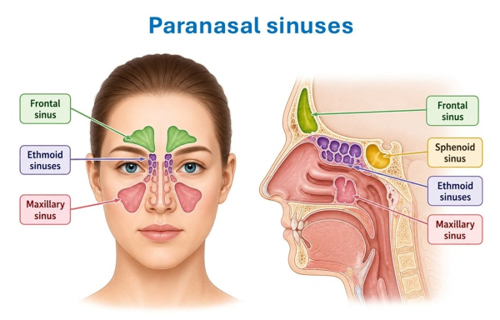
Sinusitis is a common condition characterised by inflammation of your sinuses. Also known as the paranasal sinuses, these are the air-filled spaces around your nose and forehead. When the soft tissues that line these spaces become infected, that’s sinusitis.
Some people experience isolated episodes of sinusitis. But for around 11% of UK adults, their symptoms last for more than 12 weeks, making it a chronic (ongoing) condition.
There are many causes, from allergies to viral infections. Fortunately, there are also many ways to help relieve your symptoms, from at-home care to medicines and, in severe cases, surgery.
Types and causes of sinusitis
There are two types of sinusitis, and they are categorised by how long you are affected by your symptoms, and in many cases, their cause.
Acute sinusitis
Acute sinusitis refers to short-term inflammation of your sinuses, with symptoms typically lasting under four weeks.
The most common cause of acute sinusitis is a viral infection, such as a common cold or the flu, that blocks your sinuses from draining properly. This triggers an infection to develop in the soft tissues that line them.
In some cases, this type of sinusitis can turn into a bacterial infection. This can happen if the viral infection weakens your immune system enough for bacteria to get into your sinuses and cause further infection.
Chronic sinusitis
Chronic sinusitis refers to persistent sinus inflammation that gets worse or better, but never really goes away.
There’s no single cause of chronic sinusitis. Instead, it can be triggered by a range of factors, including:
Repeated colds or infections.
Nasal polyps, which are soft tissue growths inside your nose.
A deviated septum (crooked wall that separates the nostrils).
Allergies, including seasonal.
Asthma.
Other health problems.
Symptoms of sinusitis
Sinusitis can cause a range of symptoms, including:
Facial pain/pressure: This can feel like a throbbing pain, tenderness or aching around your eyes, nose and in your forehead. It can feel worse when you bend forward.
Stuffy nose: A blocked, stuffy nose that may run with thick yellow or green-tinged discharge.
Post-nasal drip. This is where mucus drips from your sinus cavities down the back of your throat.
Reduced sense of smell: Or things may smell different to how they should.
Headache or toothache: This often occurs around your temples and extends into your upper jaw, making your teeth ache.
Fatigue: Particularly feeling more tired than usual.
Bad breath: That may not be noticeable to you (if you have a diminished sense of smell).
If you notice any of these symptoms, it is recommended that you make an appointment with your GP or visit a pharmacist for advice and support.
Diagnosis of sinusitis
Sinusitis is usually diagnosed using a combination of a physical examination of your nose and throat, along with a discussion around your symptoms.
If your doctor suspects chronic sinusitis, they may recommend a diagnostic test called a nasal endoscopy. This is where a thin tube with a light and camera at the end (called an endoscope) is passed up into your nose, to provide a real-time view of your sinus cavities. You may be referred to an ear, nose and throat (ENT) specialist for your endoscopy procedure.
Self-help for sinusitis
The good news is that there are things you can do to help improve your sinusitis symptoms at home that don’t involve medication or surgery. They can be particularly good at helping in the case of acute sinusitis, which typically clears up by itself within a few weeks anyway.
Nasal irrigation
Flushing your nose with a saltwater solution is one of the most effective ways of clearing your sinuses. Be sure to use distilled water, or boil and cool your tap water. This will help prevent any further risk of infection.
Drink plenty of water
Staying hydrated is a good way to thin mucus so that it’s less congesting and easier to drain. Aim for at least 6-8 glasses per day. You should also avoid alcohol and caffeine, which both have dehydrating effects and can worsen swelling.
Steam therapy
Inhaling steam can help soothe pain, loosen mucus and support drainage. Place a bowl of hot water on the side and place your head over it, being careful not to get any on your skin. Use a towel and place it over your head to trap steam into the space so that you can inhale it.
Sleep with your head elevated
This can help to reduce swelling and encourage your sinuses to drain. Use pillows to prop yourself at a 30–45-degree angle.
Use warm compresses
Placing warm compresses against your forehead and nose, cheeks and eyes can help to relieve facial pain, loosen mucus and ease pressure
Take over-the-counter pain relief
If you’re in pain, over-the-counter relief such as paracetamol or ibuprofen can help. Always check with your pharmacist or doctor before taking any medication.
Avoid irritants
If you know the cause of your sinusitis, do what you can to avoid triggers. For example, if it’s caused by hay fever, close your windows, take antihistamines and use a barrier treatment to try and limit your exposure.
Medical treatment for sinusitis
If at-home solutions aren’t providing enough relief from your sinusitis symptoms, you may need to consider prescription medication, or even surgery.
Prescription medications for sinusitis
Prescription medicines for sinusitis depend on whether it’s acute or chronic, or whether you’ve also got a bacterial infection. They could include:
Corticosteroid nasal sprays, which are designed to reduce swelling and inflammation in the sinus cavities.
Oral steroids, which may be recommended if nasal sprays are unsuccessful.
Antihistamines, which can be effective if allergies are the cause of your sinusitis.
Decongestants, that help to reduce nasal swelling.
Antibiotics, which are only given if you have a bacterial infection present, you’ve had viral sinusitis that has lasted for at least ten days without improvement, or if your symptoms are particularly bad.
Your doctor will be able to recommend the best prescription medication for sinusitis for you, based on your individual circumstances.
Surgery for chronic sinusitis
Surgery is only ever recommended for sinusitis when you suffer from symptoms regularly and you’re unable to get enough relief using any of the more conservative treatments. There are two common surgical approaches.
Functional endoscopic sinus surgery (FESS)
This is the most common surgery for sinusitis and involves using an endoscope to see into your nasal cavities and remove anything that may be causing a physical blockage. This could be nasal polyps, bone or even heavily swollen tissue.
It’s usually performed using general anaesthetic, meaning that you’ll be asleep for the duration of the procedure. It doesn’t necessarily offer a permanent cure, but it can help ease symptoms alongside using more topical therapies.
Balloon sinuplasty
Balloon sinuplasty is a minimally invasive surgery where a balloon is inserted into a specific sinus cavity and inflated to temporarily widen the space. It’s usually carried out under local anaesthetic, and you will be able to go home the same day. There’s little to no downtime, but you’ll also need to continue to use topical treatments as recommended by your doctor.
Treatment for sinusitis | ||
|---|---|---|
Treatment | Options | Notes |
Home remedies | Nasal irrigation, steam therapy, warm compresses and adequate hydration. | Thins the mucus, soothes irritated membranes and promotes natural sinus drainage. |
Over-the -counter pain relief | Paracetamol or Ibuprofen | Relieves facial pain and headache, and lowers fever. |
Nasal sprays and drops | Saline sprays, nasal corticosteroids (e.g., fluticasone, mometasone), over-the counter decongestants (e.g., oxymetazoline) | Reduces swelling and inflammation. |
Prescription drugs | Antibiotics (e.g., Amoxicillin, Doxycycline, Co-amoxiclav), oral steroids. | Amoxicillin is commonly first-line for bacterial sinusitis. Oral steroids are typically used for severe chronic cases or when nasal polyps are present. |
Surgical options | Functional endoscopic sinus surgery (FESS) | Considered for chronic sinusitis that fails to respond to prolonged medical treatment. |
Complications of sinusitis
Serious complications of sinusitis or sinusitis treatments are rare, but they can happen if the infection becomes severe or spreads. They can include, but aren’t limited to:
Asthma and breathing problems.
Sleep problems.
Reduced or lost sense of smell.
Severe fungal infection.
Repeated infections.
Infection of the tissues around your eyes.
Sleep disturbances.
Acute sinusitis turning into chronic sinusitis.
Possible sight loss.
You should contact your doctor urgently, call 111 or go to your nearest emergency department if you experience:
Swelling or redness around the eyes.
High fever.
Severe headache or forehead swelling.
Confusion.
Double vision or vision changes.
Stiff neck.
Prevention of sinusitis
There are a range of things that you can do to help prevent acute sinusitis, and that may also help to control the symptoms associated with the chronic version of this condition, including.
Wash your hands regularly.
Avoid smoky, dusty or other chemical-filled environments.
Stay away from people who have colds/flu.
Use hand sanitiser.
Drink plenty of fluid.
Use a humidifier if the air is dry.
Use saline sprays to keep your nose moist.
Eat a healthy, nutritious diet to help boost your immune system.
Stay up to date with all recommended vaccinations and boosters.
Avoiding anything that triggers your allergies is one of the best ways to avoid chronic sinusitis. If you can, make sure you identify the biggest causes of your symptoms and find out how you can minimise contact with them.
Frequently asked questions about sinusitis
Where are your sinuses?
Your sinuses are hollow cavities within your head, surrounding your nose and eyes. Everyone has four main pairs of interconnected sinus cavities. These are:
Maxillary sinuses: Found in your cheekbones, underneath your eyes.
Frontal sinuses: Found in your forehead, directly above your eyebrows.
Ethmoid sinuses: A network of tiny air cells situated between your eyes, behind the bridge of your nose.
Sphenoid sinuses: The deepest sinuses, located behind your eyes and the upper part of your nose
Can I fly if I have sinusitis?
It’s generally recommended to avoid flying if you have sinusitis. This is because when you fly, the pressure inside the aircraft cabin can change dramatically, and this could make the pain and other symptoms of sinusitis worse. It can even risk damaging your eardrums.
If you absolutely have to fly, you can help minimise the effects on your sinusitis by taking decongestant medication before you travel or using pressure-regulating earplugs. You can also undertake manual pressure equalisation activities like chewing gum, sucking on sweets or yawning during take-off and landing.
What are nasal polyps?
Nasal polyps are soft, painless noncancerous growths that form on the lining inside your nasal passages and sinuses. They look like tiny grapes, hanging down from the soft tissue and causing breathing difficulties, a reduced sense of smell and congestion. They can be caused by a range of factors, from asthma and allergies to immune conditions. There are treatments that can shrink nasal polyps, or in severe cases, surgery may be used to remove them.
Can decongestant tablets help sinusitis?
Yes, decongestant tablets can shrink swollen blood vessels in your nose cavities and sinuses, which can reduce inflammation, ease pressure and improve mucus drainage.
Will sinusitis go away on its own?
Acute sinusitis that is caused by a cold or flu will usually go away on its own once your body has fought the virus that caused it. However, it can take up to four weeks for the symptoms to ease fully. If your symptoms persist longer than this, it’s advisable to speak to your doctor as you may have developed chronic sinusitis.
Can sinusitis cause tooth pain?
The pressure of sinusitis can sometimes feel like tooth pain, but the actual cause of your discomfort radiates from your sinus cavities.
Is sinusitis contagious?
No, sinusitis is not contagious. However, sometimes the causes of sinusitis, such as a cold or flu, or bacterial infection, can be. For this reason, it is recommended that you maintain strong hand and mouth hygiene practises while you’re affected.
Can sinusitis cause dizziness or affect your hearing?
Yes, sinusitis can cause dizziness and may affect how well you can hear. This all comes down to pressure. Sinusitis can cause a pressure imbalance inside your head that disrupts your inner ear, which is responsible for your balance.
Can stress or a weakened immune system make sinusitis worse?
Yes, stress and/or a weakened immune system can make sinusitis significantly more likely. This is because stress increases inflammation, while a weakened immune system makes it difficult for your body to fight off viruses that could cause sinusitis.